
My friend Eric recently noticed that I have a penchant for using quotes from the British sci-fi series Doctor Who in my “superhero quote of the day” feature. He wondered aloud whether the Doctor, the time-traveling alien hero of that show, qualifies as a superhero under the conventional definition—which quickly led us to wonder what the conventional definition was. While there doesn’t seem to be an iron consensus on what makes a superhero, permit me to list a few common elements of most definitions—and a few surprising characters who make the cut as a result. Please note: a superhero need not have all these characteristics … but anyone who has enough of them might qualify as a superhero. I usually abide by a rule of three—hit a trifecta, and you at least qualify for a cape. Note also that these qualifications are independent of the medium in which a superhero appears. They can show up in novels, plays, movies, TV shows, comics, radio, anything that tells a story.
 1. Superhuman powers. Let’s face it, this one is basic. Although I’m a big fan of low-power and no-power heroes, none of them are actually powerless, at least in my view. Besides the usual assortment of power rings, magic words, and bodies that can soar through the air unaided, there are other powers. In my personal opinion, Batman’s superpower is preparedness—he always has whatever he needs in that belt. Don’t tell me that’s not a superpower! And consider Sherlock Holmes’ one-in-a-million intellect. Is that a superpower, or is it excluded just because it’s (theoretically) possible (at the outer limits of human capability)? There’s a lot of wiggle room here, but if you can do something 99% of the rest of the population can’t do, you just might have a superpower.
 2. Codename. This is part of what made superheroes different from the fictional characters who came before them: that colorful name, which is not only trademarkable but intensely memorable, and somehow sums them up. You may not remember Billy Batson, but you sure as hell remember Captain Marvel. On this front, at least, characters like Zorro and the Scarlet Pimpernel count as superheroes. The essence of a good codename is that it sums up the character in ways that his or her real name does not, and “Fox” sums up a sword-swinging swashbuckler better than Diego de la Vega (James of the Field) ever could. Codenames are often tied into a superhero’s origin story (Spider-Man) or a theme that underlies most of their adventures (The Question).
  3. Distinctive costume. The obvious example here is spandex, but it’s not the only example. Superhero costumes evolved originally because they made comics faster to draw—just sketch a nude human form without obvious genitalia, add a few lines to indicate gloves, boots, and/or trunks, maybe pencil in a cape and it’s on to the next panel without all those tedious wrinkles and lines you find in real clothing. But even when it’s not skintight, a distinctive costume enables artists with wildly different styles to draw the same hero recognizably. I’ve seen hundreds of different faces for my favorite heroes, but the mask is always familiar. In this respect, the Phantom of the Opera might qualify as a superhero—the makeup for the monster changes from film to film, but the mask is always there, and it helps you identify the character as much as it ever conceals him. Ditto the Lone Ranger; I still treasure one 1940s serial whose central conceit was that the audience had to figure out which of six men was the real masked avenger. I peered at every scene, trying to catch minute details that would identify the actor under the mask—until I found out, years later, that all six actors switched off to make it harder to guess. I didn’t even notice when the Ranger suddenly grew three inches between scenes; the human brain sees that mask and gunbelt and makes the connection.
 4. Alignment with good. Let’s face it, this goes with the word hero. Of course, there’s some room for wiggling here, especially with the rise of antiheroes (like the 1930s Sub-Mariner, who once tried to destroy New York City when he wasn’t fighting Nazis), but a moral compass that points toward white hats is a helpful indicator that you might be dealing with a superhero. It’s important, though, to note here the difference between what gamers call “lawful good” and what they call “chaotic good.” Your hero can be a straight-arrow, law-abiding type, someone like Will Eisner’s The Spirit, or he can be a wacky or violent force of nature, nominally on the side of the good guys but not averse to wanton destruction and/or absurdity in the pursuit of his goals. See the character of V in Alan Moore’s V for Vendetta.
  5. Extranormal opponents. What good is a superhero if he just fights ordinary bank robbers? A hero who’s truly super usually needs larger-than-life opponents. The stories work better if you have a steady supply of bad guys that the regular cops just can’t handle, and they’re always useful for upping the stakes. The villains may have superhuman powers of their own, like the Green Goblin, or they may simply be beyond the reach of conventional authorities, like Professor Moriarty in the Sherlock Holmes stories. By this definition, of course, Sherlock Holmes qualifies again as a superhero (note also the superpowers, alignment with good, and distinctive costume), as does James Bond.
 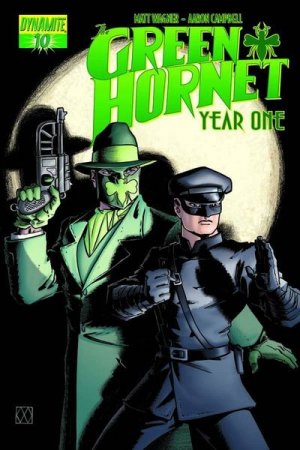 6. Extralegal status. Very rarely is a superhero a recognized part of law enforcement, and when he is, the institution of which he is part is usually unrecognizable as a police force. Does anybody’s local PD look like the Green Lantern Corps, or the police force Robocop works for? Being an extralegal vigilante gives the character, and the people writing him, wiggle room. Very commonly, superheroes operate outside the law but parallel to it—though they can find themselves at odds with it too, as the Green Hornet and the Lone Ranger so often do, and even Batman does in his early adventures.
  7. Dual identity. This is often credited as the innovation that originally set superheroes apart from the pulp heroes who came before them. Most superheroes live a double life, at least on some level; they’re not super all the time, and the audience couldn’t relate to them very well if they were. No, the best heroes have some element of their identities hidden from at least half the people they know, and sometimes from themselves too. The Incredible Hulk is an extreme example of this, often unable to remember events in one form that happened to him in the other. Jason Bourne of Robert Ludlum’s novels might qualify here, too; his preternatural spy skills come with amnesia, and he must piece together the life he left behind him.
  8. Difference. This is a personal requirement of mine, but an important one. If your character is a policeman who can fly and shoot laser beams from his eyes, but he lives in a society where everyone can do that, he is not necessarily a superhero. Ditto a colorful costumed type who lives in a world where everyone has a colorful costume. A superhero has to be different from the world around him. Consequently, a normal man in extranormal circumstances can become a superhero. Flash Gordon was a normal Earthman transported to an alien planet; Tarzan was a human infant raised by apes; both qualify as superheroes under this definition. Heck, setting is what makes Superman a hero—back on Krypton, he’d be just another guy. It’s Earth’s sun that gives him his powers, and his status as an alien that makes him an outsider, an immigrant, to our world. His stories wouldn’t work if he’d just stayed home.
 So what about the Doctor? Well, as an alien from the planet Gallifrey, he has several unique physical characteristics that might qualify as superpowers; he’s got two hearts, he once grew back a hand that had been cut off, and instead of dying, he “regenerates” into another actor, good as new. He has a codename—it’s established in the show that his real name is not “the Doctor,” though his real name has not yet been revealed. He’s got the distinctive costume nailed—every incarnation of the Doctor since 1963 has had a distinctive outfit that he wore in every episode with very little variation, and you can’t argue those costumes weren’t distinctive when they included things like an 18-foot-long scarf, a brightly colored plaid trenchcoat, or a stick of celery pinned to a lapel. Alignment with good? Yeah, mostly, since he’s all about saving planets and mucking up the plans of people and creatures who harm other life forms. He’s got a strong taboo against killing, too, and considers it morally wrong. Extranormal opponents are a gimme—he fights aliens and killer robots and mad scientists and monsters of all descriptions. While he has occasionally been allied with legal organizations like UNIT, he never seems to get along with them well, and quite often he’s running around mucking up their plans, so “extralegal” seems to fit. And he’s definitely different from those around him; we hardly ever saw him on his home planet or near any other member of his species, even before the show’s writers destroyed that planet and killed the other Time Lords, so he’s always out of place. The dual identity is more in question; while he does clearly have another name and a life back on his homeworld (we know he once had a child, for instance) and while he does conceal his true name even from his friends, we hardly ever see the part of his life that he conceals. No phonebooth for him. But seven out of eight characteristics make for a pretty compelling argument.
And what about my characters, you might ask?
 Well, Rae doesn’t have much in the way of superpowers, unless bullheaded stubbornness counts, but I wouldn’t bet on that state of affairs lasting long if I were you, and Trevor’s freaky levels of training and obsession surely count if Batman’s preparedness does. Rae has a codename at the beginning of the story, and Trevor had one in the past and will have one again in the future, if he lives long enough. They both have distinctive costumes, from Rae’s Peregrine tunic to the uniform jacket Trevor inherited from his mentor (more on that later). Rae’s fully aligned with good, and Trevor tries, though it doesn’t always work out for him. Rae’s extranormal opponents are a little wimpy, unless you count the Masked Rider, but Trevor’s fought mad scientists and evil ninjas and whatall, so I think he counts there. Extralegal status—well, neither one of them’s a cop, and they’re both out fighting bad guys, so I think that’s a gimme. Then there’s difference; Rae has that in spades, what with her society’s prejudice against non-powered humans being heroes, and Trevor qualifies as different just as long as he stays away from the superhero culture in which he was raised. Rae’s stronger on the dual-identity front than Trevor, but Trevor did maintain a secret identity back in Chicago, and went to extreme lengths to protect that secret. So that makes the final score seven out of eight for each of them.
 Of course, some real people qualify as superheroes, too. Albert Einstein counts for superpowers, distinctive costume, and difference. You could make an argument for Johnny Cash on the grounds of preternatural talent, costume, and alignment with good. T.E. Lawrence had a codename, a costume, and a fair amount of difference. It’s not exactly a hard and fast set of rules.
Still, I wouldn’t mind meeting a few superheroes in the real world …


