Showing posts with label comic books you should be reading. Show all posts

Monday, June 9, 2014

Comic Books You Should Be Reading: All-New Invaders

Hello! I’m not dead! Wow, I say that a lot.

This week’s blog is both another installment in CBYSBR and the start of what I hope will be a semi-regular tradition—Bottom of the Stack. Check the end of upcoming blog entries for an informal list of comic series I’m really enjoying at the moment. I won’t post everything I buy—just the two to five series at the bottom of my monthly comic stack. (I read in reverse order of preference, so the best stuff is at the bottom.) I hope it’ll help those of you who are contemplating getting into comics to find a way in. Not everything I read is for newbies, but my very favorite comics are usually well-written and all-around fun, so if you’re not too picky about needing to know all the continuity in advance, they should all be a good read.

Cool? On we go!

I’ve agonized over whether to add All-New Invaders to Comic Books You Should Be Reading. It is, hands down, my favorite monthly comic book at the moment. Hell, even Flatmate’s gotten into it—she asks me every couple of days when the next one hits the shelves, and complains loudly that she’s gotten so sucked into the plot and characters that she wants a new installment every week, like a TV show.

On the other hand, I yet cling to the last shreds of my journalistic objectivity, and I know that All-New Invaders, for all its virtues, is not going to be everyone’s favorite comic in the universe. I buy it for specific reasons, I love it for specific reasons, and some of those specific reasons are personal to me rather than universal to comic readers, or even general to the readers of my blog.

But what the hell. It’s my blog, and you wouldn’t be reading it if you couldn’t stand to hear my opinions now and then.

Here’s the SparkNotes version: All-New Invaders is a standard Marvel superhero comic, done extremely well, with a strong flavor of Band of Brothers and just a touch of Joss Whedon about it. If that sounds good, buy it. Seriously. Go buy any or all of the first five issues. I’ll wait here until you come back.
Captain America and the Human Torch will have coffee while they wait for you.
Here’s the backstory for the uninitiated: back during World War II, there was a superhero team called the Invaders whose membership included, among others, Captain America, Bucky Barnes, Prince Namor the Sub-Mariner, and the Human Torch. (There were also other members who came and went but don’t much matter right now.) The group broke up around the end of the war, and the heroes mostly died or disappeared. In the present day, the core team has been resurrected and/or recalled from obscurity in various Marvel books, and now they’re banding together again to handle stuff they can’t trust anybody else with. That’s where the Band of Brothers homage comes in—the core of this book is the relationships among the team’s central players and the fact that they trust and understand each other in ways that are utterly alien to most modern superheroes. 
"Don't worry, Jim." "We've got your back."
-Scene from My Little Invaders: Friendship is Explosive.
So while the main plot of All-New Invaders is standard superhero fare, the engine that drives the story is the friendship between four extraordinary men. I’m a big fan of this kind of storytelling, not least because I think the Western world would be less screwed up if there were more cultural space for intimate platonic male friendships. And the fact that writer James Robinson manages to balance excellent World War II flashbacks and present-day action with the complexity of those relationships bodes well for the future of this series.

Robinson is best known for his series Starman for DC, which itself balanced the legacy of a Golden Age superhero with a hip modern sensibility and beautifully delineated family dynamics. It’s no surprise, then, that he can turn that knack to a new family—a group of superpowered freaks and loners who essentially adopted each other in the middle of a world war, and have found those bonds unexpectedly resilient despite their decades spent apart. Robinson has also gotten lucky in his artist, Steve Pugh, whose work incorporates both gorgeous anatomy and action shots that make the book a smooth read and distinctive, expressive faces that add another layer of meaning to Robinson’s dialogue.

Don’t believe me? Take this panel, which takes place after Captain America has spent several pages insisting that another World War II hero, Aarkus the Vision, will help the Invaders out just because they palled around with him during the war. Nobody has believed Cap because Aarkus was always kind of weird and now he’s fully off his nut. But when asked, Aarkus basically says, “Of course I’ll help—you guys are my brothers,” and this panel happens:
See that wry, slightly smug smile on Captain America’s face? That’s how the nicest guy on the Avengers says, “I told you so.” It’s not easy to get that kind of expression out of a face that’s 75% covered, but Pugh does it.

Here’s the casting rundown, with what makes each character distinctive and interesting:
Pictured: not Johnny Storm
Jim Hammond/The Human Torch. Jim was one of Marvel Comics’ first hit characters, way back in 1939. He’s a “synthetic human”—android? robot? accounts vary—who, thanks to a design flaw, can burst into flame and fly. In this comic, he’s a sweet and slightly world-weary Frankenstein’s creature who likes people but doesn’t really understand them and is on the brink of giving up on ever being one himself. By the end of the first arc, he’ll be reconsidering his lost quest for humanity, and wrestling with the question of what kind of man he wants to be.
"Arrogance! Stupidity!" Namor's life words.
Namor the Sub-Mariner. Another classic, Namor is a human-Atlantean hybrid (his parents were Romeo and Juliet with more salt water involved) who’s strong, tough, and able to fly and breathe both water and air. He’s also the most arrogant, imperious character you’re likely to meet thanks to the fact that he’s the honest-to-God king of Atlantis, with a lot to prove to his people because of his half-breed status. Oh, and he’s technically a mutant—among Marvel’s first. All of that translates to a massive chip on his shoulder that he removes only for the guys who knew him before he was king. In the first story arc, his customary arrogance takes a real blow when his stubbornness gets him captured and results in the death of one of the few people he genuinely likes.
"So this is like the old days, gentlemen." Cap's favorite thing to say.
Steve Rogers/Captain America. If you don’t know who this character is, why are you reading my blog? There have been a lot of interesting interpretations of Marvel’s super-soldier, but Robinson chooses to strike a delicate balance between Cap’s military training and his feelings for his friends. Cap is the team leader, the team strategist, and also the guy who always believes his pals will come through for him just because they’re his pals. Captain America is great at reading soldiers and figuring out how they’ll handle a situation … but he tends to see only the best in his closest friends. The unspoken question of the series is who will be the first to let him down, and how he’ll cope.
Falling off a roof while shooting at aliens.
Must be Tuesday.
James “Bucky” Barnes/Winter Soldier. Rounding out the main team roster is Cap’s former sidekick, now a Marvel star in his own right. Of all the team members, Bucky is the most personally loyal to the group (or at least to Cap), but also the most problematic. He is legally dead and supposed to be keeping so far off the radar that even his former allies in the Avengers don’t know he’s still walking the shadows rather than pushing up daisies. The first story arc will leave readers questioning Bucky’s psychological stability even as he puts his life on the line for his team.

The comic has just wrapped up its first story arc, “Gods and Soldiers.” The plot involves a Kree device called the Gods’ Whisper, which can control the actions of deities—Norse gods, Eternals, pretty much anything in the Marvel Universe with god-level power. The Nazis got hold of it during the war, but three Invaders took it away from them, broke it up, hid the pieces, and then had their memories wiped so even the Allies couldn’t be tempted by the possibility of controlling the gods themselves. The story begins when the Kree decide they want their doohickey back and go after the three Invaders in question, kidnapping one of them (Namor) in the process. Once the boys realize what’s going on, Captain America leads the team to the Kree homeworld, Hala, to destroy the Gods’ Whisper and rescue Namor. They’re after the Gods’ Whisper because they don’t think anyone should have it, but they’re rescuing Namor because almost nobody else on earth actually likes Namor, which means he’ll literally die of being a jerk if they don’t do something.
Captain America delivers the team's mission statement.
Also, "Namor being Namor" is going to be that guy's official cause of death.
If that sounds a bit Whedonesque, that’s because it is. This story revolves around a group of veteran heroes (and actual veterans) being there for each other—including lots of shooting, face-punching, and death’s-head humor—because they know nobody else can or will do the job. Oh, and they’re also saving the world for pretty much the same reason. It’s a cross between a war comic, a superhero adventure, and a slightly metafictional family drama.

Meta? Oh, yeah, it’s meta.

Here’s an example. (If you can’t abide spoilers, skip down seven paragraphs RIGHT NOW.) At a key moment in the fourth chapter of the story, the heroes have been captured by the Kree and are being told the fates in store for them—imprisonment, dissection, etc. Now, because this team includes the Winter Soldier, I got to this chapter assuming that he would completely lose his composure at some point because the central macguffin is a device that controls people’s minds. Bucky does not cope well with the prospect of mind control, and the mere suggestion that he’s going to get his head messed with again is usually enough to make him go postal.

And he does go postal, in spectacular fashion—
Leap BEFORE you look!
AND HE DIES.
What, AGAIN?!
I was laughing right up until the body hit the floor. Then I started wondering whether such a popular character could be killed off with so little fanfare. It had to be a fake-out, right? Even though if Bucky were going to get killed on an Invaders mission, that’s exactly how it would happen …

But it turns out, of course, that he isn’t dead, that it was a fake-out, and that this is, in fact, all part of Captain America’s plan.
Note the bodies on the floor.
Because Bucky Barnes.
Let me be clear: Captain America planned to have Bucky completely lose his mind, get shot, and die—because it was exactly what everyone, including readers, expected of him.
"Why can't JIM die this time?" Because he lights himself on fire, that's why.
This may be the best piece of metafictional humor I’ve seen in comics in a while.
 
All told, All-New Invaders is a wonderful blend of action, humor, and personal drama. The writing is crisp, the art is both lively and technically proficient, and there’s very little continuity that requires actual explanation—you don’t need to know precisely why these guys are friends to understand that they are friends, and very good ones. Sadly, the book is on the publishing cusp right now, not selling enough copies to be a breakout hit but not an obvious failure either. If it’s going to live up to its excellent potential, it needs some more readers. (Hey, editorial! Would it kill you to slap Cap and Bucky on the cover more often? Maybe pull in some movie fans?) It suffers a bit from not being a high-concept book—I can’t sum up its appeal in one sentence that actually appeals to people who haven’t heard of the Invaders. But every issue is like a visit with old friends, combined with a really good action movie, and that’s a rare feat in a comic these days.

If you’ve got the budget for it and you’re in the mood for space adventure, superheroics, and arguments about why it can’t be Jim who fakes his death this time, this is the book for you. A new issue hits the stands this Wednesday.

Bottom of the Stack:
All-New Invaders (Marvel)
Loki: Agent of Asgard (Marvel)
Winter Soldier: The Bitter March (Marvel)
Original Sin (Marvel)
Daredevil (Marvel)

Monday, March 24, 2014

Winter Soldier Blogathon, Day 5: What to Read, Where to Start, and Why to Care


Wow, you made it through! Or you skipped here. Either way’s fine by me. This entry is designed to be a guide to the Winter Soldier’s appearances in the comics. I’ll start with a chronological rundown of the graphic novels in rough order of publication, and then do a short list of the best jumping-on points for this character. I’ll conclude with one last bit of fannish gushing on why you should care about this character, and a little bit of what he means to me.

Be warned—there’s a lot of stuff to cover. Here’s a picture of my personal collection of Winter Soldier graphic novels, in order:

Yes, I can lift the entire stack at once. Barely.
Yeah, there’s a lot of stuff. But I’ll guide you through it. And as always, I recommend used booksellers like abebooks.com and Powell’s Books over paying full price at new-book retailers. Onward!

WHAT TO READ:

What to read: This.
For once, Marvel has made your job easy. If you want to get started on the world of Bucky Barnes/the Winter Soldier and you don’t want to do any hunting, there’s a terrific new hardcover edition of the complete Winter Soldier storyline, put out just in time for the movie. It’s $34.99, and worth every penny. (If that seems pricey for one graphic novel, note that it’s got thirteen issues in it—the equivalent of two trade paperbacks, either of which would retail for about $20. So even in hardcover, it’s a bit of a cost savings.) There’s one issue missing from this book, but it was a one-off “event story” that took place in an alternate universe and had absolutely nothing to do with the Winter Soldier storyline, which I assume is why it’s been omitted. The book does not suffer in its absence. Don’t worry about it.

If you’d rather go the cheaper route, Volume 1 and Volume 2 of the Winter Soldier storyline are available in used paperback form, though they appear to be out of print.

If you like that story and want to keep reading, here’s a short rundown of later volumes in the series:

3 and 4. Red Menace: Crossbones returns, and Steve and Bucky end up in London.

5. Civil War. Cap joins the resistance to the Superhuman Registration Act. Bucky does some skullduggery for Nick Fury. Contains Winter Soldier: Winter Kills, a beautiful one-shot special about how Bucky spends his Christmas. Hint: it involves violence and awkward team-ups with teen superheroes.

6, 7, and 8. The Death of Captain America, vols. 1-3 (The Death of Captain America / The Burden of Dreams / The Man Who Bought America). This three-volume saga covers it all, from Steve’s assassination to the hunt for his killers to Bucky’s transition to life as the new Captain America. Some of the knottiest plotting in all of Ed Brubaker’s run. I cannot summarize this, but if you really like twisty plots and a million reversals per chapter, this is going to be your crack.

9. The Man With No Face. Bucky-Cap faces the vengeful survivor of one of his nastiest Winter Soldier missions. Guest-starring the Sub-Mariner, who adds a lot of comic relief.

Namor reacts to Bucky and Natasha having a moment. Thanks a lot, Namor.
10. Road to Reborn. A more or less random collection of stories, collecting a series of clues leading up to …

11. Captain America: Reborn. Guess what? Steve’s not actually dead! There’s time travel and mad science and oh so much crazy. It’s a fun story, though.

12. Two Americas. Steve insists that Bucky keep the Captain America identity, so Bucky and the Falcon go hunt down an insane doppelganger of Steve Rogers who escaped during a previous story. Imagine Bucky and the Falcon fighting domestic terrorists in rural Idaho. Yeah, it’s like that.

13. No Escape. Baron Zemo, the grandson of the World War II villain who nearly killed Cap and Bucky at the end of the war, decides to avenge his grandfather’s honor and kill Bucky-Cap off. He eventually settles for second prize …

14. The Trial of Captain America. Once Zemo has exposed Bucky’s past as the Winter Soldier, Bucky goes on trial for his decades of Cold War crimes. Meanwhile, the Red Skull’s daughter, Sin, proclaims herself the new Red Skull and goes on a rampage. Bucky must decide whether being Captain America means a) going along with due process or b) stopping a supervillain from blowing up the Statue of Liberty. Did I mention Bucky has poor impulse control?

15. Prisoner of War. Bucky gets off on the U.S. charges, but the Russians demand extradition. Bucky goes to the gulag and gets thrown into a series of cage matches, which turn out to have a motive even more sinister than bad guys just wanting to watch an American superhero fight for his life. The Winter Soldier’s legacy just won’t leave Bucky alone. Psychological games ensue. Meanwhile, Steve and Natasha try to prove Bucky’s innocence. Espionage hijinks ensue.

16. Captain America and Bucky: The Life Story of Bucky Barnes. After Bucky “died” during the not-very-good Fear Itself crossover, the monthly Captain America comic became Captain America and Bucky for a while. The first storyline, “The Life Story of Bucky Barnes”, presents a series of untold tales from Bucky’s past—including his childhood before he met Steve Rogers, a couple of wartime adventures, and a Winter Soldier tale focusing on his romance with the Black Widow. I have not included the next volume of Captain America and Bucky in this list because Bucky Barnes isn’t actually in it. Long story. After that the title became Captain America and Hawkeye, and then fizzled out. This volume is the only one relevant to this timeline.

17. Winter Soldier: The Longest Winter. With Steve finally back in the Captain America costume (and a new Captain America monthly title), Bucky sets off to clean up a few Winter Soldier-related messes. Natasha comes along for the fun and because somebody has to stop Bucky from leading with his face. Romance and a machine-gun-toting gorilla ensue. Also, Bucky meets Doctor Doom and they get along as well as you’d expect. Ha.

18. Winter Soldier: Broken Arrow. A Soviet sleeper agent, trained long ago by the Winter Soldier, is out to destroy the world that replaced his. A key part of his plan involves getting the Black Widow on his side, in more ways than one. Creepy and action-packed, with great twists.

19. Winter Soldier: Black Widow Hunt. The saga of the sleeper agent continues, as our heroes discover some nasty parts of that plan that I won’t spill here. Bucky fights Hawkeye, Wolverine, Daredevil, Cap, and the Black Widow. There’s really an unreasonable amount of fighting in this book. Oh, and it also rips my heart out and crushes it before my eyes, because … well, you should know by now.

20. Winter Soldier: The Electric Ghost. With the Black Widow out of his life, Bucky sets about picking up the pieces of another old mission—one that killed a SHIELD agent and left a little girl named Tesla Tarasova orphaned. Tesla has grown up into the rather frightening Electric Ghost, who can get into Bucky’s head like no one else. This storyline is the only one on this list that Ed Brubaker didn’t write, and it’s also one of the weakest.

Winter Soldier was canceled after the Electric Ghost storyline, so since then it’s just been individual comics not yet collected in trade form. If you want to check them out, there are two series:

21. All-New Invaders. This comic, written by James Robinson (a man who knows his World War II heroes) is a big team-up between Captain America, the original Human Torch, the Winter Soldier, and Namor the Sub-Mariner, among others. Lots of World War II flashbacks and some really good Band of Brothers-style camaraderie in a group of modern heroes whose bond goes all the way back to the 1940s. Right now the plot involves the alien Kree kidnapping Namor for plotty reasons and Namor’s old war buddies invading the Kree homeworld to get him back—largely because Namor’s such a jerk to most people that nobody else wants to rescue him.

22. Winter Soldier: The Bitter March. I wasn’t impressed with the first issue of The Bitter March, written by Rick Remender, but the second has piqued my interest. The story follows a lone SHIELD agent, Ran Shen, trying to smuggle a couple of ex-Nazi scientists out of eastern Europe  in the 1960s so SHIELD can have their magic formula. Chasing Shen is a bunch of Hydra goons and the Winter Soldier. The first issue focused mostly on Shen, and Bucky was basically playing the Terminator, coming after him over and over again. The second issue, however, got into the Winter Soldier’s head a bit more; it’s starting to look like Bucky is trying to retake control of his own brain, and that’s not going to end well for anyone. Seems like things are heating up!

WHERE TO START:
I’ll make this short and sweet. Find the quote that sounds like you and read the answer:

“I want to know what’s going on when I watch the movie, but I only want to read one book.”
Read the Winter Soldier hardcover, or its two trade-paperback equivalents. That’s you sorted.

Pictured: You, sorted.
“I want the best Bucky-Cap storyline.”
Read The Man With No Face. Action, angst, and a pretty good mystery. This is good for the Bucky-Natasha shippers, too.

Oh, look, the cover is a Bucky fashion show!
“I want a little bit of everything—a sampling of the character from different periods in his life.”
Read The Life Story of Bucky Barnes. It’s your one-stop shop.

Also, there's interior art by Chris Samnee. You want that.
“I want the most kickass Winter Soldier action you’ve got.”
Read Winter Soldier: The Longest Winter. Then keep reading if you like what you see.

Including a gorilla with a machine gun. And a jetpack.
WHY YOU SHOULD CARE
Aside from the fact that I obviously adore this character and these storylines, it’s worth pointing out why I adore them. The Winter Soldier storyline was, at the time, one of the most complex ever to appear in mainstream superhero comics—both in terms of plot twists and in terms of its characters’ emotional arcs. It set the pattern for a lot of the really terrific stories that have come out of the Big Two—especially Marvel—in the last decade. It’s not too much of an exaggeration to say that Winter Soldier gave a lot of people permission to break the rules of comics—as long as they produced exceptional stories in doing so. At the same time, it set the bar pretty high. As I said at the beginning of this series, this is one of only two comic books that I hand people in order to make them cry. Its cinematic scope and the neverending gut-punch of its emotional impact cannot be understated.

You will spend the entire storyline doing this. I am not kidding even a little bit.
Don’t believe me? Look at this incredibly short summary:

In Winter Soldier, Captain America finds out that his long-dead kid sidekick, Bucky, is actually a zombie cyborg assassin working for the Russians. Fight scenes and angst ensue.

Pretty much what I thought would happen when I saw this.
Does that sound remotely interesting? No. In fact, it sounds completely batshit insane. I’ve quoted this summary to non-geeks and gotten completely baffled looks. And yet that’s the bare bones of this storyline. What makes it work—what made me and a million other fans care about it—is the way in which that batshit-crazy story was told. This book makes you care about one of the permanent corpses so much that even the most rule-conscious nerd can be persuaded not to care about the rules. Screw Steve Rogers’ angsty motivation and screw the necessity of conflict; by the end of this book, you want Bucky to live and be happy, no matter what it takes. And yet we’re talking about Bucky the dead kid sidekick, butt of a thousand nerd jokes. And yet, when Steve Rogers came back from the dead in 2011, there was significant fan outcry against killing Bucky off because so many people liked Bucky-Cap better than Original Cap. He had earned their allegiance. Nerds almost never shift their loyalties like that—but this storyline got them to do it.
I own the T-shirt of this.
I MADE the T-shirt of this. And people bought it.
On paper, this story should never work. And yet it did, and it still does, and it’s inspired a lot of great work from a lot of other writers.

I promised myself when I started this series that I wouldn’t talk about my most personal reason for being a diehard Winter Soldier fan, and I won’t. It’s not something you need to hear, especially on a blog whose audience includes children, and in any case I probably won’t be able to talk about it in public for a while yet, if ever. But I will say this: For a lot of fans, especially younger ones (by which I mean under the age of 35), there’s something in the saga of Bucky Barnes that resonates. If you’ve ever felt like you couldn’t escape some horrible piece of your past, he’s a character for you. If you’ve ever been expected to measure up to an impossible standard, he’s a character for you. If you’ve ever had to sit and wrestle with your demons in silence because, for one reason or another, you just couldn’t speak up about them to anyone—here’s Bucky Barnes.

This page probably sums up James Buchanan Barnes better than any other.
He’ll match you ghost for ghost, burden for burden, demon for demon, and he’ll still get up again the next morning. He’ll make fun of himself sometimes, and he’ll play the hardened cynic, even though he’s really got a squishy romantic heart that’s far too close to his brittle surface.
Bucky and Natasha go for a walk in the rain. Squishy romanticism ensues.
He’ll never be the hero Steve Rogers is, and he’ll never live up to Captain America’s example, and he knows both those things—but he usually has no idea how deeply he inspires the man he admires most.
Steve works on his eulogy for Bucky, just before finding out Bucky's not dead.
“This is what it is to be human,” Spider Robinson once wrote: “to persist.”

Bucky Barnes persists. Half man and half machine, half monster and half hero, he is one of the most human characters in modern comics. So here’s hoping his movie turns out half as good as it looks.

And hey, would it kill anyone to get Natasha back in the book? Come on!

Monday, April 8, 2013

I didn't die! And here are some Comic Books You Should Be Reading.


Chapter 4 is going up. Really. On Wednesday. We’re having a one-week delay so I can finish my piles and piles of tax paperwork. I am part of that charming American segment known as the “1099 economy”, which means that I have a billion pieces of paper that must be assiduously collected and filed so that I don’t get audited into the next millennium. The last scene of Chapter 4 will get written after that. And before you groan, Chapter 5 was written weeks ago, so there’s no way in hell that’s not going up on schedule.

So, to tide you over until the taxman is satisfied, here are the best comic books sitting in my stack of recently read titles:

1. Guardians of the Galaxy. I’ve been really excited about this series. I’ve mentioned before that Star-Lord, the leader of GotG, is one of my all-time favorite superheroes, and I was pretty annoyed that the Marvel higher-ups allowed him to be killed off a few years ago in the Thanos Imperative miniseries. Granted, it was how he would have wanted to go—guns blazing, a universe about to collapse on him, shooting Thanos in the face a whole bunch of times and wisecracking all the way to his doom. With his best friend/occasional sidekick/all-purpose straight man Nova by his side, Star-Lord had a good end. But while I was psyched at the news of an impending Guardians of the Galaxy movie and happy to hear that Star-Lord would be returning to life in the comics—written by a big-name comic scribe, no less—I was apprehensive. Did I really want one of my childhood favorites to be sucked into the latest Marvel Comics megastory?

Well, so far I’ve been pretty happy with it. Nobody has yet explained how Star-Lord is alive again, and the World War I steampunk uniforms of the previous GotG have been replaced with some pretty stupid outfits that make everyone on the team look like Imperial Stormtroopers with arc reactors, and Iron Man is somehow a member now, but Brian Michael Bendis is getting the writing mostly right at the moment. He’s doing a good job with that world-weary, middle-finger-to-the-universe attitude that keeps my favorite character alive in a cosmos that constantly demands that he be, well, cosmic. (Which he never is, at least not anymore.) I’m also intrigued by the new take on Star-Lord’s absent father, an alien prince who used to be pretty much a good guy and is now more of a jerk. I’d wondered for years why nobody ever tried to have a word with Star-Lord about royal succession and the fact that Prince Jason never had any other kids, and now it looks like this hard-bitten hero’s going to be sucked into palace politics or die (again) trying to get out of them. Good times for me. I’ll probably give this title its own blog entry in another month or two.

2. Sherlock Holmes: The Liverpool Demon. This series, from the creative team that produced Dynamite Entertainment’s The Trial of Sherlock Holmes, keeps the old detective magic alive as Holmes investigates a series of murders apparently committed by Spring-Heeled Jack. Perhaps the best part of this series is that writer Leah Moore seems committed to keeping Sherlock Holmes weird—he leaves Watson hanging in mid-conversation so he can go investigate some random detail in a corner of the room, and generally creates quite a bit of social awkwardness that’s strongly reminiscent of the literary Holmes, even more than the obscure clues and bizarre crimes for which his stories are known. I can’t wait to see how this case will shake out, and how the Watson-Holmes relationship will evolve.

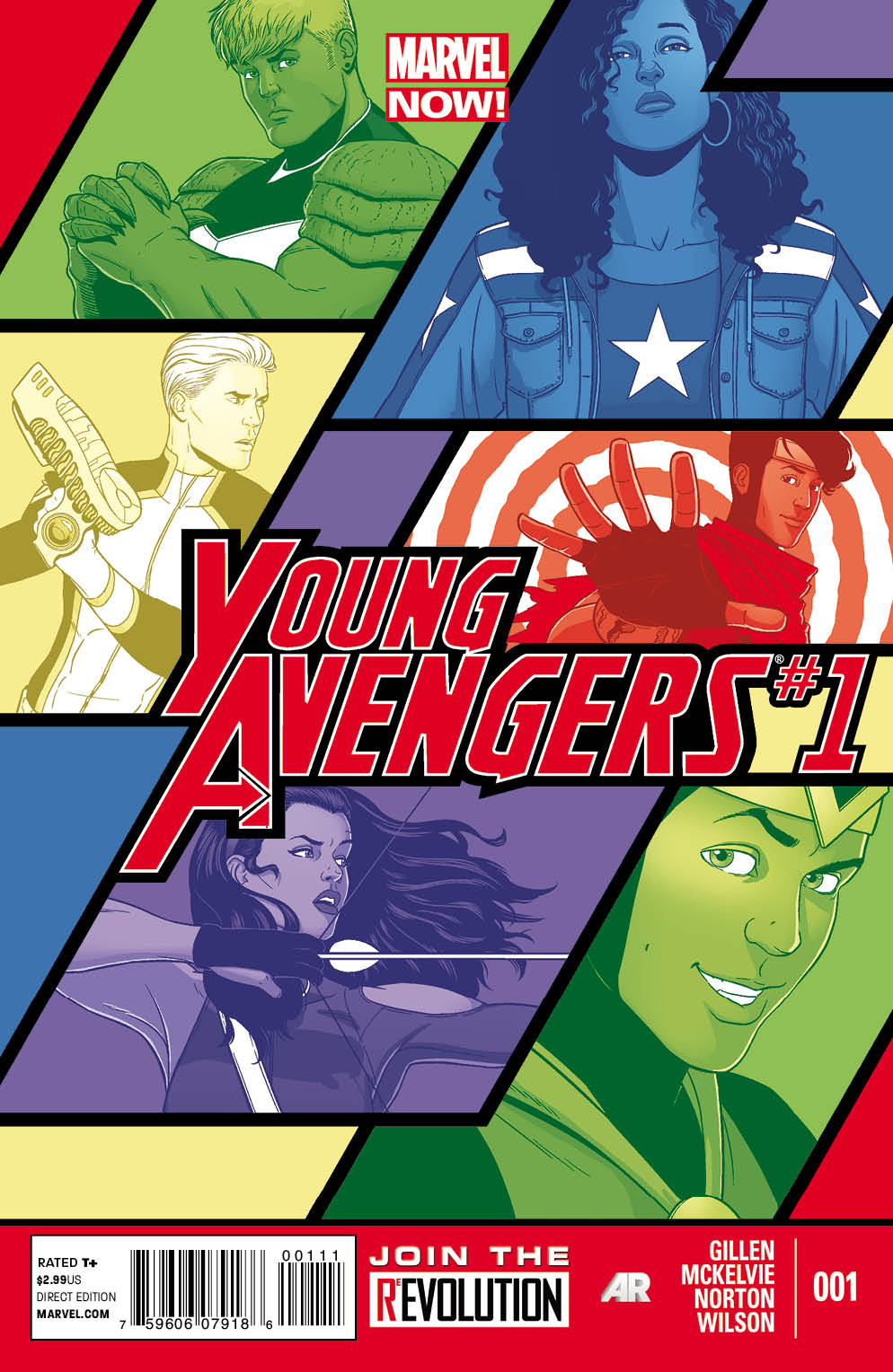
3. Young Avengers. Kieron Gillen, Jamie McKelvin and Mike Norton have taken over for Allen Heinberg and Jim Cheung on the saga of the superpowered teenagers who might be the next generation of Avengers … but definitely are in a lot of trouble, all the time. On top of the chaos-magic user Wiccan, his Skrull-Kree boyfriend Hulkling, and the snarky archer Hawkeye (a teenage girl, not the guy in the Avengers movie—long story), Gillen and company have added three new members to the team: a universe-hopping powerhouse named Miss America, an antisocial character named Marvel Boy who absolutely cannot be described in a single paragraph, and Loki. Yeah, the Norse god of mischief. He’s somehow a teenager (don’t look at me, I haven’t been paying attention) and doing all the usual Loki stuff, only with a bunch of superkids to work with. And they don’t want to work with him because, well, he’s Loki. It’s a blast to see Kid Loki work with that. Best line of the most recent issue: “Now that it’s clear exactly how communally buried in the waste of trolls we are, can we talk like civilized superbeings?”

4. Nova. This is Marvel’s other new “cosmic” title. In it, Jeph Loeb and Ed McGuinness bring us the saga of Sam Alexander, a teenage boy who inherits his father’s helmet and superpowers as a member of the Nova Corps. Except it turns out Sam’s dad wasn’t one of the straight-arrow space-cop Novas we’ve come to know and love … he did something a little more like interstellar black ops. And now 15-year-old Sam’s neck-deep in it, along with Gamora the green-skinned assassin and Rocket Raccoon the gun-toting space raccoon. This goes about as well as you’d expect. I still can’t read this title without giggling, especially the most recent issue, in which Sam tests out his powers and sets off every car alarm in town. And then he accidentally flies into the moon. Yeah, the actual moon. (“Off. Turn. Something. Stop. MOOOOOOOON!”) It’s that kind of comic book. No celestial body is safe …

5. Daredevil. I’ve blogged about this. Everybody’s blogged about this. This title won pretty much every Eisner Award there is, and it’s still awesome. They’re up to four volumes in hardcover and it’s still awesome. I thought they were going to run out of awesome after several arcs with terrific villains (Coyote had a stupid name, but ohhhhh the drama) and crazy twists with Daredevil’s powers (losing all his senses? What now?) and a romance that kind of made sense (the girl actually came to her senses and dumped Matt Murdock the Trouble Magnet for a good and non-crazy reason, which just makes her more awesome) … but now the title is balancing the mysterious appearance of crazy people with Daredevil’s hypersenses against the very personal drama of Matt’s best friend, Foggy Nelson, having cancer. Not the happy cured-in-two-issues kind of cancer, either. Daredevil’s been nicknamed the “Man Without Fear” since the 1960s, but Mark Waid’s wacky, supposedly lighthearted run on the title has taken this superhero to some intimately scary places, both professionally and personally. Honestly, just pick up any issue or collection you can get your hands on and start reading. It’s all that good.

Two more days until Rae and Trevor come back. Until then, happy reading!