Showing posts with label in memoriam. Show all posts

Monday, June 24, 2013

Chelsea


Written on the evening of June 22, 2013. I typed until my eyes wouldn’t stop leaking.

I took a wrong turn a few hours ago and found out my friend was dead.

I was out running errands with my mom. She turned the car down a random side street near her home and was having a little trouble finding her way back. I knew the area—I used to bike those streets, and my mentor lived there—so I was directing her … and then we noticed a little makeshift memorial on a corner. A woman was just stepping out of a car to lay a bouquet of flowers against a street sign. There was a white cutout of a bicycle leaning against the pole, with flowers and candles around it.

My mom said, “I think this is the corner where that girl died.”

I said, “I guess so. That would explain the ghost bike and the flowers. What girl?”

Mom: “I don’t know. It made the news. She was riding her bike and a truck hit her.”

We rolled closer to the makeshift memorial. The girl’s name was written on the bike, along with her date of death and the words “Watch For Bicyclists”. Her first name was Chelsea.

Me: “I hope it’s not that Chelsea. I know it’s horrible, but I hope it’s not the Chelsea I know. Did the news say whether she had long red hair?”

Mom: “No. They just said she was 20, and not in school.”

Me: “Well, that’s good. Chelsea’s older than that, and she went to college.”


I went home, reasonably sure I hadn’t just passed a memorial to a friend. But now, as I Google the name on the bike and the limited number of accidents involving bikes and trucks in that town, it looks like my mom was wrong about her age and I was wrong about her still being alive. It was that Chelsea. My Chelsea, although she was never anybody’s but her own.

I’ve lived pretty much my entire life under the threat of imminent death. (Short version for those late to the party: I have a medical condition that is either going to kill me so dead one day that I won’t live long enough to hit the floor breathing, or going to let me live a hundred years.) I know that I walk around every day with the Grim Reaper for a shadow. But I forget sometimes—often, really—that everyone else does too. All you normallish people, you die too.

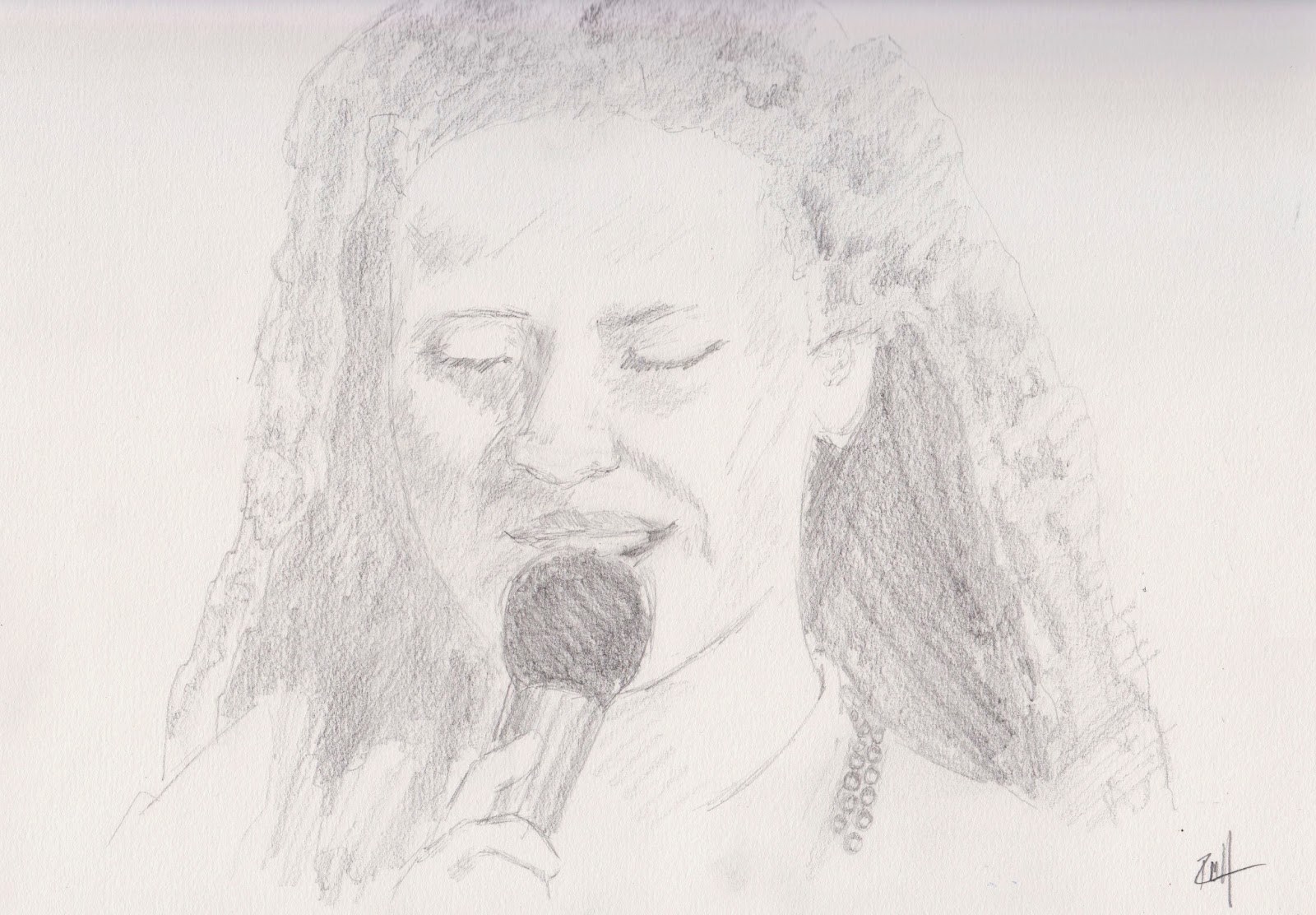
I didn’t know Chelsea well. We were in a study group together; I attended regularly, and she came when her schedule allowed. It’s easy to remember when Chelsea was there and when she wasn’t; she had long curly red hair that trailed behind her wherever she went, like the tail of a comet. I’d see her walking through the neighborhood sometimes, or riding her bike to class, with that hair whipping in the breeze behind her. I still can’t imagine that the truck driver didn’t see her. It seemed to me that everyone, everywhere she went, always saw her. Sometimes they saw nothing else.

Chelsea was studious and serious, with a streak of wicked wit that showed itself in bright flashes. She was slow to talk about her personal life, from what I remember, but when she did speak, she always had something worthwhile to say. She was several years younger than I, and I kept forgetting it because she was so solemn, and so wise. She was a fantastically talented musician; she played jazz clarinet in local combos under the terribly appropriate name Chelsea Joy. Even in college, she was a regular performer in demand at the town’s one and only good jazz club, which was why she couldn’t always make the meetings. I imagine she said things through that clarinet that she didn’t feel like saying in words. I regret that I don’t understand music well enough to have heard them.

The group broke up a few years ago, but I met her by chance in the library on March 17, 2012. I was up to my eyeballs in a manuscript, but I caught a flash of copper in my peripheral vision and looked up. I ran halfway across the reading room to catch her, because Chelsea was worth running after, and we chatted. She talked about graduating from college, about future plans. I don’t remember a lot of it. She had to leave after only a few minutes; her mother was waiting. I only know the date now because I turned around after she said goodbye, saw something striking on the cover of a magazine, and snapped a picture of it with my cellphone. The picture’s still in the phone’s memory, and so I have a picture of a magazine cover instead of a picture of Chelsea.

I don’t yet know how I’m supposed to feel about this. Obviously I wasn’t in Chelsea’s immediate social circle; I hadn’t even seen her in over a year, and didn’t find out about her death until two days after it happened. But I feel like the world is missing a piece I didn’t even know was there. A few notes have fallen out of the symphony when nobody was looking, and now it just sounds … wrong.

I avoid discussing religion in this blog; my beliefs are my own, I want readers of all faiths (including None of the Above) to feel welcome here, and I’m not interested in having theological debates with the internet. Chelsea believed in an afterlife, though—not loudly or fervently, but with a bone-deep conviction, quiet and solid as granite. I’m fairly sure she’s there now, in the finest heaven in creation, probably in an endless, fantastical jam session with a thousand brilliant musicians and every eye in the place secretly on her. She was like that when she played on earth; the ultimate transformation would change that but little. But she isn’t playing here, where I can hear her. I won’t hear her again for a good long while … unless, of course, I do.

I am writing a book about death. The Resurrectionist’s Song has a lot of death in it, though it doesn’t always take. I have thought about death from every possible angle, from the point of view of everyone involved. But this is different. This is Chelsea.

That’s how it always is. It’s always different.

Selfishly, stupidly, I want to hear a jazz clarinet.


Monday, June 27, 2011

Gene Colan: An appreciation

Gene Colan, who died last Thursday at the age of 84, was the first comics artist I noticed.

I’ve blogged before about how Daredevil was an inspiration to me as a kid, how the adventures of the sightless superhero helped me deal with my own deteriorating eyesight and fears of going blind. And while I’ve always been more into the words than the pictures in comics, Gene Colan was the exception to that rule.

Those first few comics I bought from the used bookseller mostly dated from the 1970s, and I read every word on every page. I read the copyright notices. I read the ads. And I read the letter columns, also known as lettercols. In one early issue, sandwiched between arguments about whether it was appropriate to have Uri Geller guest-star in a Marvel comic book, was a letter asking the editorial staff to bring Gene Colan back on as the book’s regular artist. The letter writer, whose name has vanished from my memory, praised Colan at length, going on about his distinctive, masterful pencils.

Later, when I found a few Daredevil issues with Gene Colan listed as their artist, I studied his work closely to see what the fuss was about. I noted the way his characters often seemed to emerge from deep pools of shadow. Darkness in Gene Colan’s art was an independent force, alive and vibrant. Where other artists used token shadows to give their pictures a touch of dimensionality, Colan built worlds with it, using shadows to create rich, complex settings and characters. His art looked like nothing else anyone was doing, before or since. A few years after he drew those iconic Daredevil adventures, someone coined a term for what Colan did—“painting with pencil.”

Colan started in comics in the 1940s and drew just about every hero of note at some point. He was best-known for his runs on Iron Man, Daredevil and Tomb of Dracula (and Howard the Duck—yes, you read that right, and the comics were good). He co-created Blade the Vampire Hunter—the guy Wesley Snipes played in the movies. He also co-created the Falcon, a longtime sidekick to Captain America who was the first African-American superhero in mainstream comics (the Black Panther came first, but he was African) and the first black superhero not to have the word “Black” in his name. It was Colan’s idea to make the Falcon black—not for political reasons, but because he enjoyed drawing African-American facial features and found them interesting and beautiful. That was the way he worked, when he was allowed—he drew the things he found interesting, and it made his stories richer.

I learned to draw—as much as I can draw—by copying Gene Colan. My pencils never ended up looking much like his, but I learned a lot about anatomy and a fair bit about the use of light and shadow. When I was stuck on a story, I would often pull out a sketchbook and try to work out a character’s face or costume, sketching my feelings about the story into the shadows in their hair or the cast of a mouth. Somewhere I think I still have one of the sheets where I carefully copied—never traced—every image of Daredevil from one of his comics. I wasn’t an artist, but it taught me to think.

To this day, when I plan scenes in my stories, I think about light and shadow and how it falls on and around my players. When a high-school drama teacher assigned me to block the balcony scene from Romeo and Juliet and keep the lovers apart without a balcony, I placed Juliet next to a candle and forced Romeo to stand outside the circle of its light lest he be discovered. The big fight scene in Masks is blocked heavily around light and darkness, when characters can be seen and when they must materialize out of solid black. In my head, they look like Gene Colan illustrations, emerging out of the shadows to do amazing things.

I met Gene Colan exactly once, at Comic-Con in 2009. I found out at the last minute that he would be attending, and was so flustered that I couldn’t even find any of my Daredevil comics for him to sign—and many of them were so old and fragile that I couldn’t bear to risk them on the train journey. Instead, I grabbed the most recent thing he’d drawn, a 2009 stand-alone issue of Captain America about the hero and his sidekick Bucky fighting vampires during World War II. (Characteristically, writer Ed Brubaker said the story came out of Colan telling him he wanted to draw “World War II, darkness, and rain.”) It was the issue for which he and Brubaker would later win an Eisner Award, comics’ equivalent of the Oscar, for Best Single Issue.

I was with a friend, and told her that we could do anything she liked, see anything that interested her, at the convention—as long as I got to meet Gene Colan. Shortly after lunch, I finally figured out where his table in the artists’ alley was, and approached it with trembling hands, trying not to bend or warp the comic lest I give the impression that I did not respect the gentleman’s work.

He wasn’t there.

A woman was—I believe it was his wife, Adrienne. I explained my situation and how much Gene Colan’s art meant to me, and she smiled politely and offered to sell me an original print that he’d signed earlier. It was a bit north of my budget, but I gladly bought it, well aware that many Golden and Silver Age artists use commissions and con sales to pay their bills because they retain few rights to their earlier work. As far as I was concerned, Colan had more than earned my money. I guess my earnestness showed, because Mrs. Colan suggested I come back at a certain time, when her husband would likely have returned. She said he’d be particularly happy to meet a young woman who appreciated his art—he had few female fans. I gladly agreed, wheedled my friend into letting me come back, and wandered off for a while to kill time.

When I did come back, he was waiting there at the table, a small, slightly hunched man with a white beard and a red baseball cap with the Daredevil insignia on it (which made me doubly happy, of course). He visibly brightened up when Mrs. Colan pointed me out as “the young lady I mentioned.” I gushed incoherently about learning to draw by copying his art, and for some reason made a big deal of never tracing it. He approved, smiled, and said encouraging things. He wore amazingly thick glasses and nearly touched his nose to the cover of my comic when he signed it; the artist who had taught me not to fear darkness was almost blind himself now. I didn’t have the heart to tell him I was really more of a writer than an artist, because I didn’t have a clear way to say what his art had meant to me as a writer. I got so nervous that I completely forgot to tell him I was wearing a T-shirt with my own drawing of Rae Masterson on it (although maybe that was for the best—it really wasn’t a very good drawing, and the colors on the T-shirt had printed strangely).

My friend suggested I take a picture with him, since I was so excited, and I loudly cursed the fact that I’d forgotten my camera at home. My friend gently pointed out that we both had camera phones. I turned bright pink. We hastily arranged a photograph, and Gentleman Gene gamely doffed his Daredevil cap and smiled in the direction of a device he almost certainly couldn’t see. We took the photo, and I thanked him profusely, not wanting to trespass on his time any more than I had to, and beat a hasty retreat. As we walked away, at about 3:00 in the afternoon on my one day at Comic-Con, I turned to my friend and said, “Okay, we can go home now. My day is complete.”


I’ve met movie stars. I’ve met congressmen. I’ve met a couple of my favorite authors, and hope to meet more. I never geeked out over any of them as much as I geeked out over meeting Gene Colan.

He deserved it.

Adrienne Colan died about a year ago. Gene Colan reportedly continued to work on commissions and other artwork up until about a month back. He is survived by his children and legions of fans.

His friend and biographer Clifford Meth, in accordance with Colan’s wishes, has set up the Gene Colan Scholarship at the Joe Kubert School. In lieu of flowers, Meth has requested donations to the scholarship fund, made out to “Joe Kubert School” and sent to:

Gene Colan Scholarship
c/o Clifford Meth
179-9 Rt. 46 West
Rockaway, NJ 07866

I’ll leave you guys with a note from Mr. Colan, supplied by Greg Hatcher via Clifford Meth:
 

Rest in peace, Gentleman Gene.